Charming Cat Art: Digital Papers for Creative Projects
Understanding the Digital Paper Collection
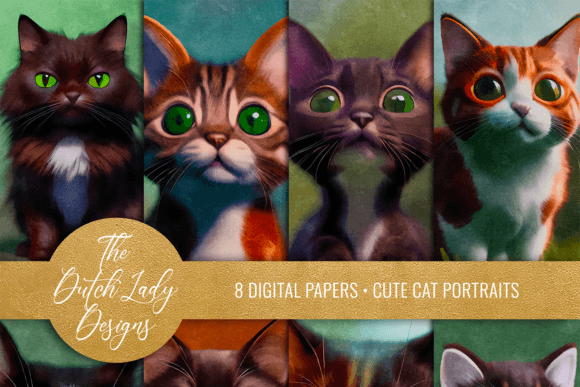
The "Cute Cat Portrait Paintings Backgrounds" set offers a distinct visual foundation for a wide range of creative endeavors. This collection features eight unique JPEG images, each portraying charming cat portraits rendered in a painting style. The aesthetic leans towards warmth, character, and a touch of whimsy, making it more than just a simple background—it's a piece of art in itself. Each file is sized at 3600x3600 pixels with a high 300dpi resolution, ensuring crisp, professional quality whether you're working on digital screens or preparing files for print. It's important to note these images are not seamless; they are standalone artistic compositions designed to be a focal point rather than a repeating pattern.
As a creative font for your visual projects, think of these backgrounds as a powerful design asset. They provide immediate personality and visual interest. The style isn't a generic texture; it's a curated artistic element that can significantly influence the tone of your final product. Whether you're a designer crafting a brand identity for a pet-related business or a hobbyist making personalized stationery, these backgrounds deliver a consistent, professional look that's hard to achieve with standard solid colors or abstract patterns.
Practical Applications for Designers and Creators
The true value of these premium font backgrounds lies in their versatility. For digital projects, they serve as excellent foundations. Bloggers and website owners can use them to create eye-catching featured images, headers, or section breaks that instantly communicate a friendly, approachable brand. Social media managers can leverage them as backgrounds for quote graphics, promotional posts, or story templates, helping content stand out in crowded feeds. They are particularly effective for brands in the pet, lifestyle, or artisanal spaces where a personal, crafted feel is paramount.
In the realm of print and product design, the applications are equally robust. The high resolution makes these images perfect for physical products. Imagine using them for:
- Custom Wall Art: Printing a single portrait as a poster or framed art for a home office, vet clinic, or cat café.
- Stationery and Cards: Creating unique greeting cards, invitations, or notebook covers that feel bespoke and special.
- Packaging and Apparel: Applying the artwork to product packaging for cat treats, toy boxes, or even as a design element on t-shirts, tote bags, and mugs.
For entrepreneurs and small business owners, this set is a practical resource. It eliminates the need to commission custom artwork for every small project, providing a library of ready-to-use, commercial font-style assets that can streamline your workflow and elevate your marketing materials.
Integrating Artwork into Your Workflow
Working effectively with these digital papers requires a bit of technical understanding. Since the files are JPEGs, they are flat, single-layer images. This means you cannot edit individual elements like the cat's eyes or the background color separately. Instead, you'll use them as a complete canvas. Your role shifts from editor to compositor—layering text, logos, or other graphic elements on top of the background.
This is where your modern typography choices become critical. Pairing these expressive, painterly backgrounds with the right typeface is key to maintaining readability and visual hierarchy. A clean, simple sans serif font often works best for body text, providing a clear contrast against the detailed artwork. For headlines, you might experiment with a serif font for elegance or a script font for a more whimsical touch, but always test for legibility. The goal is to create a balanced font pairing where the text supports the art, not competes with it.
Before starting any project, ensure you have the proper image editing software. Tools like Adobe Photoshop, Canva, or even free alternatives like GIMP are necessary to resize, crop, and layer these backgrounds with your other design elements. Always test your design at its intended size—what looks good on screen might need adjustment for print. By treating these backgrounds as a core component of your design assets library, you can efficiently produce polished, professional work that resonates with an audience that appreciates charm and quality.